
China Box-type Substation: Revolutionizing Power Distribution
2026-07-31
In the rapidly advancing world of electrical infrastructure, the box-type substation stands out as a true game-changer. Compact, efficient, and remarkably versatile, this solution is rewriting the rules of power distribution across China. Leading the charge is Chang Song, a brand synonymous with reliability and innovation in the field. With their expertly engineered units, they are tackling space constraints and deployment challenges head-on, proving that great things truly come in small packages. Read on to explore how this technology is shaping a more resilient grid.
The Rise of Compact Power Hubs in China's Energy Landscape
China's energy infrastructure is quietly undergoing a transformation that few outside the industry have really noticed. Instead of relying solely on sprawling, remote power plants and endless transmission lines, cities and industrial zones are beginning to embrace smaller, localized energy centers. These compact power hubs are designed to integrate generation, storage, and distribution into a single, efficient footprint. They're not just about saving space—they represent a fundamental shift toward resilience, allowing communities to manage their own energy needs with far less dependence on centralized grids.
What's driving this shift is a blend of necessity and innovation. Rapid urbanization and the push for carbon neutrality have exposed the limitations of traditional models. Compact hubs, often built around combined heat and power systems or renewable sources like rooftop solar paired with advanced batteries, can be deployed quickly and adapted to local conditions. In industrial parks, they're already cutting costs and emissions by turning waste heat into a resource. In new urban developments, they're quietly weaving energy production into the fabric of daily life—tucked under commercial complexes or integrated into district cooling networks.
The real story here isn't just technical—it's about agency. By decentralizing energy, these hubs give cities and businesses a direct hand in their power supply, buffering them from price swings and grid instability. Expect to see more of them as policy incentives tilt toward distributed systems and technology costs keep falling. The rise of compact power hubs marks a pragmatic, ground-up rethinking of how energy flows through China's economy.
How Box-type Substations Are Redefining Grid Flexibility
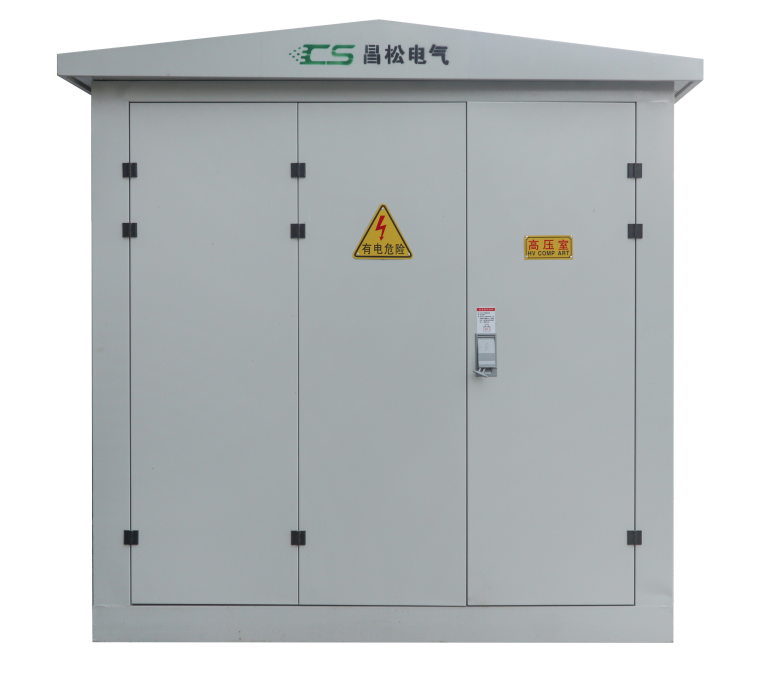
The rise of decentralized energy systems is pushing utilities to rethink how they manage load fluctuations and fault responses. Box-type substations are emerging as a surprisingly nimble answer to these challenges. Unlike traditional brick-and-mortar setups, these compact, factory-assembled units can be deployed almost anywhere—urban alleyways, remote industrial parks, or rapidly growing suburbs—without the usual delays tied to civil works and custom engineering. Their modular design means they can be pre-configured for a specific mix of transformers, switchgear, and automation gear, then dropped into place in a matter of days rather than months.
What makes them truly transformative for grid flexibility is their built-in intelligence. Many units now come with remote monitoring, automatic voltage regulation, and the ability to island sections of the grid during disturbances. This allows grid operators to reroute power dynamically, balance renewable inputs on the fly, and even integrate battery storage with minimal fuss. When a feeder becomes overloaded, a box-type substation can step in as a temporary tie point, relieving stress without anyone on the consumer end noticing a flicker. It’s a plug-and-play philosophy applied to critical infrastructure, cutting through the inertia that has long plagued grid expansion projects.
The financial side is equally compelling. Because these substations are standardized and pre-tested, they slash the soft costs—design, permitting, on-site assembly—that often balloon in custom-built installations. For municipal utilities or co-ops with tight budgets, this opens up possibilities for incremental upgrades: instead of sinking capital into a large permanent station that might be oversized for years, they can add capacity in bite-sized chunks as demand grows. This granular approach reduces stranded assets and lets the grid evolve in lockstep with a community’s actual needs, turning what was once a rigid monolith into a living, adaptable network.
Smart Integration: Merging IoT with Traditional Power Distribution
Traditional power grids were never designed for the two-way communication that modern energy systems demand. By weaving IoT sensors and actuators into aging distribution infrastructure, utilities gain granular visibility into load patterns, voltage fluctuations, and equipment health without tearing out existing assets. This overlay approach turns passive feeders into responsive networks, where real-time data flows from pole-top monitors, smart meters, and substation gateways to cloud-based analytics engines. The result is a hybrid architecture that preserves decades of capital investment while unlocking the agility needed for renewable integration and dynamic demand response.
Making this marriage work requires more than bolting connectivity onto legacy hardware. Edge compute nodes filter and preprocess torrents of raw sensor data locally, slashing latency and backhaul costs. Machine learning models trained on historical grid behavior can then spot anomalies – a sagging conductor, a degrading transformer bushing – days before they cascade into outages. Crucially, these insights feed back into automated reclosers and capacitor banks via secure industrial protocols, closing the loop without human intervention. It’s a shift from scheduled maintenance to condition-based action, trimming operational waste while bolstering reliability.
The real leap comes when distribution intelligence extends beyond the substation fence. Neighborhood-level IoT meshes enable peer-to-peer energy balancing among rooftop solar prosumers, while predictive algorithms orchestrate electric vehicle charging to avoid peak demand spikes. This bottom-up, distributed coordination challenges the top-down hierarchy of conventional grids, creating a self-healing web where power flows are continuously optimized. The technology stack isn’t about replacing old with new – it’s about creating a layered intelligence that makes the entire system smarter, from the power plant to the plug.
Eco-Friendly and Efficient: The Green Advantage of Box-type Subs
Box-type substations are reshaping energy infrastructure by merging compact design with responsible material use. Unlike traditional brick-and-mortar setups, these units arrive pre-assembled, cutting down on construction waste and on-site pollution. Their enclosed structure minimizes the risk of oil leaks or chemical spills, while advanced insulation materials reduce thermal dissipation. Many models now incorporate recyclable components and low-loss transformers, ensuring every watt transmitted is put to work without unnecessary environmental drain. It's a quiet shift that turns a routine utility box into a small-scale sustainability champion.
The efficiency runs deeper than first impressions. Integrated cooling channels and smart ventilation maintain optimal operating temperatures without energy-hungry air conditioning. This passive climate control extends the lifespan of internal components, reducing the frequency of maintenance visits and the associated vehicle emissions. Operators benefit from a unit that runs cooler, lasts longer, and demands less intervention—a combination that notably trims the carbon footprint across the installation's entire lifecycle. In urban districts, these silent workhorses blend into streetscapes with customisable exteriors that respect both aesthetic and ecological values.
Looking ahead, box-type subs are becoming key enablers in decentralized renewable grids. They slip neatly into solar farms, wind parks, and EV charging hubs, providing local voltage conversion without the sprawl of conventional stations. Their modularity means capacity can be scaled up incrementally, aligning perfectly with the gradual rollout of clean energy sources. This flexibility avoids the overbuild and resource waste typical of oversized centralized plants. By marrying technical efficiency with environmental foresight, box-type substations offer a pragmatic blueprint for tomorrow's electrification—one where green credentials are built in, not bolted on.
From Urban Jungles to Remote Outposts: Versatile Applications
Innovation doesn’t follow a single blueprint, and neither should technology. Picture a construction team on the 42nd floor of a downtown skyscraper, juggling material deliveries while dodging cranes and tight deadlines. Now shift your gaze to a research station perched on the edge of an ice shelf, where every supply crate must traverse crevasses in whiteout conditions. The same core solution powers both scenarios, adapting with an ease that feels almost intuitive. It’s not about forcing one tool into every situation—it’s about designing a system that speaks the language of extremes, whether that extreme is vertical, frozen, or simply chaotic.
In the clamor of a humanitarian logistics hub, where tents, water purifiers, and medical kits flow in unpredictable surges, the real challenge isn’t just moving boxes—it’s maintaining clarity. A single misrouted pallet can delay an entire aid convoy. Here, fluid coordination matters more than brute speed. The same technology that watches over towering cargo stacks in a sprawling port can map a pop-up warehouse in a conflict zone, turning confusion into a choreographed dance. It’s about giving operators a sixth sense: knowing not just where things are, but where they’ll be needed before the next crisis wave hits.
Venture further out, where the asphalt ends and the jungle begins. A wildlife conservation team tracking elusive species can’t afford to lose signal or waste hours on clunky data entry. Their work—and the animals they protect—depend on gear that fades into the background, rugged enough to handle humidity, yet smart enough to learn from each expedition. Meanwhile, in a desert mining camp, the same adaptable backbone helps monitor equipment health under sand-laced winds, predicting failures before they strand a crew a hundred miles from help. These aren’t fictional use cases; they’re Tuesday. From epicenters of civilization to the remotest outposts, versatile applications dissolve the line between ordinary and extraordinary, proving that the best technology is the kind you stop noticing because it just works, no matter the stage.
Cost-Effective Deployment: Accelerating Infrastructure Modernization
Modernizing infrastructure often feels like a balancing act between staying current and keeping costs under control. The key lies in adopting a phased approach that prioritizes high-impact, low-cost upgrades first. By reusing existing hardware where possible and integrating open-source tools, organizations can stretch their budgets without sacrificing performance. This method not only reduces upfront capital expenditure but also minimizes disruption, allowing teams to learn and adapt as they go.
Another overlooked strategy is to align modernization efforts with routine maintenance cycles. Instead of scheduling separate, expensive overhauls, incremental improvements can be woven into planned downtimes. For instance, swapping out legacy components during natural refresh periods avoids the need for standalone projects. Pairing this with containerization or virtualization can squeeze more life out of current assets, creating a modernized environment that feels new without the sticker shock.
Finally, cost-effective deployment relies on smart automation to speed up delivery and reduce human error. Automated pipelines for testing and deployment cut down on manual effort, freeing teams to focus on innovation rather than repetitive tasks. When combined with cloud-based sandboxes for experimentation, this approach ensures that modernization not only accelerates but also stays within financial guardrails. The result is a resilient infrastructure that evolves continuously, at a pace that business realities support.
FAQ
A box-type substation is a compact, prefabricated power distribution unit that integrates transformers, switchgear, and control systems into a single, weatherproof enclosure. Unlike sprawling traditional substations, it's designed for quick deployment in tight urban spaces, reducing civil works and installation time dramatically.
They overhaul conventional distribution by making it modular, scalable, and far more adaptable. Instead of constructing permanent, site-built facilities, utilities can now deploy pre-assembled units that are factory-tested for reliability, cutting outages and maintenance headaches. This shift enables rapid electrification in remote or congested areas that were previously impractical to serve.
You'll find them in residential neighborhoods, commercial complexes, industrial parks, rural electrification projects, and even temporary event spaces. Their plug-and-play nature also makes them ideal for emergency power restoration after disasters, where speed is critical.
The robust steel enclosures are often insulated and ventilated to handle extreme temperatures, humidity, and dust. Internal arc-fault containment and interlocking safety mechanisms protect both operators and the public. Many models also use eco-friendly insulating materials and have reduced electromagnetic field leakage compared to open installations.
One hurdle is the initial cost for highly customized units, though this is offset by lower site preparation expenses. Another consideration is weight and transportation logistics, especially for larger capacity units. Additionally, maintenance access can be tighter compared to spacious indoor substations, requiring carefully planned component layouts.
Modern units often come with remote monitoring sensors for temperature, load, and fault indicators, all linked to a central management platform. This allows for predictive maintenance, real-time load balancing, and automated fault isolation, turning a passive distribution node into an intelligent grid asset. Some even support distributed energy resource integration like solar and storage.
Conclusion
China's push for a modern, resilient power grid has brought box-type substations to the forefront of energy infrastructure. These factory-built, all-in-one units merge transformers, switchgear, and control systems into a compact enclosure, radically simplifying deployment. In crowded cities where space is at a premium, their small footprint allows installation in tight spots—underground, on rooftops, or tucked between buildings—without the sprawling land requirements of conventional setups. For remote regions, they arrive pre-tested and ready to energize, slashing on-site construction to mere hours and bringing reliable electricity to areas once considered too costly to connect. This flexibility extends beyond location: modular configurations let operators scale capacity up or down with minimal downtime, making the grid more agile in the face of shifting demand. The result is a power network that can expand and adapt with unprecedented speed, turning once-rigid distribution into a dynamic, responsive system.
Beyond their physical adaptability, these substations mark a leap in operational intelligence and sustainability. Embedded IoT sensors continuously feed performance data to centralized platforms, enabling predictive maintenance and real-time fault isolation without sending crews into the field. That digital layer transforms a passive distribution point into an active grid participant, smoothing load balancing and supporting two-way flows from renewable sources. Environmentally, the sealed design curbs noise, prevents leaks, and pairs naturally with high-efficiency components, driving down losses. Because fabrication happens off-site under controlled conditions, waste is reduced and quality is more consistent, while the accelerated timeline cuts project emissions. From powering high-rise megacities to anchoring mini-grids in distant villages, these units deliver a rare blend of affordability and resilience. China’s wholesale shift toward box-type substations reveals a smarter blueprint for electrification—one where connectivity, conservation, and cost-effectiveness converge to redefine how power reaches the people.
Contact Us
Contact Person: Tonglun Chen
Email: [email protected]
Tel/WhatsApp: 8618906642555
Website: https://www.cncsele.com