
China Chip Resistor Selection Guide: Key Factors for Engineers and Buyers
2026-07-08
Selecting the right chip resistor in China’s fast-paced electronics market can feel overwhelming. From precision tolerances to power ratings, every parameter matters—especially when sourcing reliable components at scale. Whether you’re an engineer refining a design or a buyer optimizing the supply chain, understanding local supplier dynamics is critical. Milliohm brings clarity to this process, offering insights that bridge technical requirements with sourcing realities. In this guide, we’ll walk through the key factors that shape your decisions, helping you avoid common pitfalls and secure components that truly fit.
Resistance Values and Tolerances: Matching Precision to Real-World Needs
Resistance values are rarely exact in practice—every resistor carries a tolerance that defines how far its actual resistance can deviate from the nominal rating. A 1 kΩ resistor with a ±5% tolerance might measure anywhere between 950 Ω and 1050 Ω, and that spread matters enormously depending on the circuit. For instance, in a simple LED current limiter, a 10% drift may only alter brightness slightly, but in a precision analog sensor front-end, the same tolerance could distort readings beyond acceptable limits. Selecting the right tolerance isn’t just about accuracy; it’s about understanding what your circuit can forgive and what it absolutely requires to function correctly.
The E-series values—E6, E12, E24, and so on—offer a structured way to pick resistors, with each series balancing granularity against manufacturing practicality. E12 provides twelve values per decade, which covers most general-purpose designs without overwhelming bill-of-materials complexity, while E96 is reserved for tight precision needs where temperature stability and low drift are equally critical. It’s common to see designers default to 1% metal film resistors for everything, reasoning that the price difference is negligible, but that mindset overlooks real-world constraints like board parasitics and the law of diminishing returns. Sometimes a 5% carbon film resistor is genuinely the better choice, not because it’s cheaper, but because the circuit’s feedback loop already compensates for variation, or the node voltage has such a wide valid range that exact resistance is irrelevant.
Beyond tolerance percentages, practical matching must account for environmental factors that can push a resistor outside its specified band. Temperature coefficient, humidity, and even mechanical stress on the PCB can shift values, turning a theoretically precise design into a field failure. This is why derating guidelines exist: a resistor rated for ±1% at 25°C might drift to ±2% at full rated power and high ambient temperature. For reliable products, engineers often simulate worst-case Monte Carlo scenarios, treating tolerances as statistical distributions rather than fixed guard bands. By pairing this analysis with an honest assessment of the application’s real needs—not just what the datasheet suggests—the chosen resistance values and tolerances cease to be abstract numbers and instead become a deliberate, cost-effective match for the environment, lifespan, and performance expectations.
Material Choices: How Thick Film and Thin Film Resistors Diverge
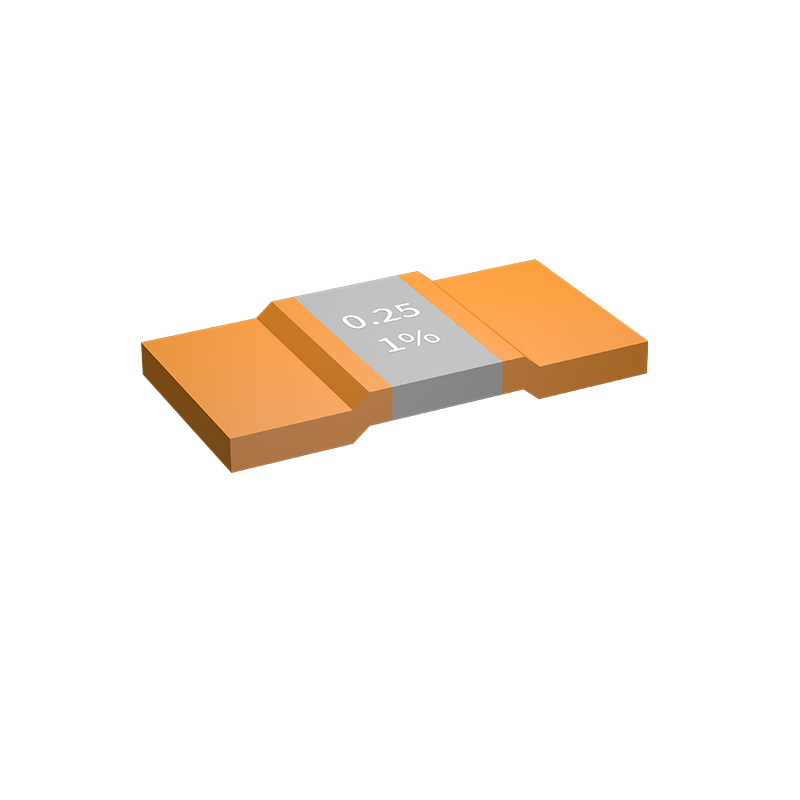
The distinction between thick film and thin film resistors starts with the materials and how they’re applied to the substrate. Thick film resistors use a paste composed of conductive oxides, glass frit, and metal particles, screen-printed onto a ceramic base and fired at high temperatures. This process creates a relatively rough, porous layer that’s mechanically robust and cost-effective, but it also introduces a certain level of noise and less precise tolerances. Thin film resistors, on the other hand, rely on vapor deposition under vacuum to apply a uniform metallic layer—typically nichrome or tantalum nitride—onto the same type of ceramic. The result is a far smoother surface and a homogenous structure that lends itself to tighter performance parameters.
These fabrication differences directly influence how each type behaves in real circuits. With thick film, you’re getting a part that can handle more power and tolerate harsh surges, but its temperature coefficient and long-term stability often fall short when compared to thin film. Thin film excels in precision analog applications because its resistance track can be laser-trimmed to extremely fine values, maintaining linearity and low noise even as temperatures swing. The material density and purity also mean fewer parasitic effects at higher frequencies, making thin film a natural fit for RF and microwave work. It’s not that one is universally better—it’s about understanding which material approach aligns with the demands of the circuit.
Beyond basic specs, the material choice also impacts long-term reliability and failure modes. Thick film resistors are more forgiving under pulsed conditions, thanks to their composite structure absorbing stress better, but they can drift noticeably over time as moisture permeates the fired paste. Thin film’s vulnerability lies in its sensitivity to corrosion or oxidation if not properly passivated, yet its drift rates remain impressively low. When you factor in the difference in manufacturing costs—thick film being cheaper to produce in high volumes—it becomes clear why both technologies continue to coexist. The divergence isn’t just historical; it’s rooted in the fundamental conflict between bulk robustness and atomic-scale precision.
Stress Testing Essentials: Uncovering Reliability Before Production
When you push a system to its absolute limits, you're not just hoping it will survive—you're actively mapping its breaking points. Stress testing goes beyond standard performance checks; it deliberately overloads resources to see what fails first and how gracefully. This isn't about simulating normal traffic spikes but forcing conditions that reveal hidden bottlenecks, memory leaks, or data corruption that regular tests would miss. The insight isn't just whether the system crashes, but how it recovers and what early warning signs emerge before failure.
One often overlooked aspect is the human element in interpreting stress test results. A raw throughput number means little without understanding the degradation curve—does latency shoot up linearly or exponentially? Are failures correlated across components, hinting at architectural flaws? Teams that excel at stress testing treat each run as a detective story, digging into logs and metrics to reconstruct the exact sequence of events. They don't just fix the immediate issue; they redesign the weak point out of existence so the same failure mode can't recur.
Integrating stress tests into a CI/CD pipeline might sound aggressive, but it's where reliability truly becomes a habit. Instead of a one-off pre-launch panic, treat stress scenarios as gatekeepers. Any new release must survive a battery of overload conditions before reaching production. This shifts the conversation from "will it break under load?" to "we already know how it behaves at 3x capacity, and here's the proof." The result is a team that deploys with confidence, not hope.
Supply Chain Smarts: Navigating Lead Times and Shortages in China
Decoding China's lead times starts with accepting that the old playbook no longer applies. Pre-pandemic buffers of two to three weeks have stretched into unpredictable windows, often swayed by regional power rationing, unexpected port congestion, or a single component shortage rippling across entire industries. Smart players now map their suppliers’ suppliers, paying close attention to secondary and tertiary tiers in provinces like Guangdong and Zhejiang, where a lockdown in one city can idle assembly lines hundreds of miles away. It’s not enough to track purchase orders—you need live feeds on local logistics health, energy quotas, and labor availability, weaving these signals into a dynamic picture that triggers reorders before the pinch turns into a crisis.
When shortages hit, the reflex is often to over-order and stockpile, but that only feeds the bullwhip effect. Instead, the savviest supply chain managers in China are rewriting the rules of engagement. They’re building shared risk pools with non-competing companies that use similar raw materials, agreeing to lend excess inventory in emergencies. Others are swapping rigid contracts for outcome-based deals where suppliers are rewarded for resilience, not just unit cost. A growing trend sees factories co-investing in backup production lines that can switch between product variants in days, turning a single-source vulnerability into a flexible network that absorbs shocks without drowning in inventory.
Ultimately, navigating China’s supply chain turbulence is about embracing transparency as a competitive weapon. This means inviting key suppliers to weekly digital huddles where both sides share real-time capacity outlooks, not just complaints about late shipments. It’s about deploying satellite imagery to monitor factory parking lots for early warnings of a slowdown, or weaving weather forecasts into demand planning when a typhoon season threatens ports in Shenzhen. Those who thrive aren’t just buying faster or cheaper—they’re architecting an ecosystem where information flows as freely as goods, turning lead-time chaos into a landscape they can finally read and react to with precision.
Cost Beyond Price: Evaluating Total Value in Volume Buys
When purchasing in bulk, the sticker price rarely tells the full story. Savvy buyers know that the true cost stretches far beyond the initial outlay. Factors like durability, maintenance requirements, and the supplier's reliability can silently inflate or deflate the long-term expense. A cheaper upfront deal might lead to frequent replacements or downtime, ultimately costing more than a slightly pricier but sturdier alternative. Evaluating total value means dissecting these hidden layers.
Beyond the product itself, volume buys often hinge on the service ecosystem surrounding the purchase. Consider lead times, after-sales support, and the flexibility of return policies. A vendor who offers swift problem resolution or on-site training can save hours of internal hassle. These soft benefits, though not itemized on an invoice, directly impact operational efficiency and should be weighed as carefully as any line-item cost.
Finally, strategic buyers look past immediate savings to the relationship’s growth potential. Consistent quality and a supplier’s willingness to innovate together can unlock compounded value over time. Discounts that erode partnership trust or lock you into rigid terms may sabotage future scalability. True value in volume purchasing emerges when cost intersects with longevity, support, and mutual adaptability.
Certifications That Count: Meeting Standards for China-Made Components
When sourcing components from China, verifying genuine certifications goes beyond checking logos. It’s about understanding which standards carry weight for your specific industry. For instance, CCC marks are non-negotiable for electrical goods entering the domestic market, while an ISO 9001 badge hints at consistent quality management—though you’ll want to dig into audit specifics rather than taking it at face value. International buyers often overlook China-specific certs like CQC voluntary marks, which can signal a supplier willing to go above mandatory requirements. The nuance lies in matching the certification’s scope to your product’s end-use environment, not just collecting paper credentials.
A growing number of factories now pursue industry-tailored approvals, such as RoHS compliance for electronics or CE marking for machinery destined for Europe. Yet, the real differentiator is how transparently a vendor shares test reports and renewal dates. Savvy procurement teams ask to see the full test documentation—not just the certificate cover page—and verify the issuing laboratory’s accreditation status. This approach reveals whether a component truly meets the claimed standard or if the paperwork was obtained from a less rigorous local body. Keep in mind that certifications carry expiration dates, and a lapsed cert is as good as having none at all.
Ultimately, the certifications that count are those that align with your compliance requirements while reflecting a supplier’s commitment to genuine quality infrastructure. Visiting a factory unannounced or conducting a video audit of their testing equipment often tells you more than a framed certificate on the wall. Combine documentation checks with direct observation of their QA processes, and you’ll filter out the noise from facilities that simply buy certifications versus those that build them into daily operations.
FAQ
Because China's electronics manufacturing ecosystem is vast and cost-sensitive, the right resistor can make or break both production efficiency and long-term reliability. Local supply chains often offer competitive pricing, but engineers must verify that components meet the required specs under actual operating conditions, especially for high-volume or harsh-environment applications.
Noise characteristics, pulse-handling capability, and long-term drift are frequently ignored. Many designers focus only on resistance value, tolerance, and power rating, but in precision circuits or high-frequency designs, these hidden factors can cause field failures that are hard to diagnose later.
China's RoHS-like regulations and growing emphasis on green manufacturing push suppliers to eliminate lead and other hazardous substances. This can affect termination finishes and internal materials, so buyers need to confirm compliance certificates and might need to re-qualify parts if a supplier changes its formulation even slightly.
TCR is critical because many Chinese factories operate with less stringent climate control, and end products may be used across extreme temperature ranges. A resistor with a poor TCR can cause measurement errors or bias shifts that worsen over temperature variations, so specifying a tight TCR isn't just a safety margin—it's often a necessity.
It starts with understanding the real failure costs. Buying the cheapest resistor that barely meets the datasheet can lead to higher rework and warranty claims. Smart buyers qualify multiple suppliers, perform batch testing on high-risk parameters like solderability and humidity resistance, and negotiate long-term pricing based on total cost of ownership rather than unit price alone.
Most Chinese contract manufacturers use standard SMT lines, but the resistor's tape-and-reel dimensions, component pocket design, and top-surface marking can affect pick-and-place accuracy and throughput. For designs targeting low-cost assembly, it's wise to pick resistors with a proven feeding track record and avoid custom packaging unless absolutely necessary.
It's volatile—raw material availability, export policies, and regional logistics can create sudden shortages. Engineers and buyers need to build buffer stock for resistors that are sole-sourced or have unique footprints, and they should monitor supplier production schedules and alternative manufacturing sites within China to mitigate risks.
Miniaturization (01005 and smaller), higher power densities, and integrated arrays are gaining traction, especially for IoT and wearables. Additionally, the push for automotive-grade and AEC-Q200 qualified resistors is growing as China’s EV market expands. Keeping an eye on these trends helps ensure designs remain compatible with available components and future price trajectories.
Conclusion
Selecting the right chip resistor in China’s vast market means aligning technical specs with real operating conditions. Resistance values and tolerances shouldn’t just be “tight” on paper—they need to hold up under temperature swings and voltage stress. Thick film resistors offer cost advantages for general-purpose use, but thin film becomes indispensable when noise, stability, or precision matters. Stress testing (thermal cycling, humidity exposure, surge handling) isn’t optional; it exposes latent flaws that datasheets ignore and separates reliable suppliers from the rest.
On the procurement side, supply chain dynamics in China can make or break a project. Lead times fluctuate with raw material availability and regional demand spikes, so buyers must cultivate flexible sourcing strategies and buffer stocks for high-run parts. Cost calculations should go beyond unit price—consider rework, field failures, and longer-term reliability when comparing volume deals. Certifications like CQC, UL, or AEC-Q200 are more than badges; they prove a manufacturer’s process discipline and simplify compliance audits. Together, these factors let engineers and buyers cut through the noise and secure components that don’t just fit a BOM but actually perform over the product’s lifetime.
Contact Us
Contact Person: Yuying Gao
Email: [email protected]
Tel/WhatsApp: +86 18926013721
Website: https://en.milliohm.net/