
China Pharmaceutical Air Compressor: Ensuring Sterility and Efficiency in Drug Manufacturing
2026-08-16
A single contaminated compressed air line can halt an entire pharmaceutical batch—costing hours of downtime and regulatory headaches. That’s why Chinese manufacturers are raising the bar, and Seize Air delivers oil-free, energy-efficient air compressors designed specifically for drug production. In this post, we’ll explore the key features that make a China pharmaceutical air compressor both sterile and cost-effective.
Air Purity Levels That Make or Break Batch Safety
A batch doesn’t fail because the air felt stuffy. It fails when a 0.5 micron particle drifts into a vial at exactly the wrong moment and colonization begins before the shift ends. Cleanroom classifications get thrown around like badges—ISO 5, ISO 7, Grade A, Grade C—but the numbers that actually save a batch are the ones nobody checks on a calm Tuesday: viable particle counts during fill, pressure cascades when a door opens, and recovery time after a glove tear.
Compressed air is the usual suspect that escapes review. The same line that drives a filling needle also carries moisture, oil aerosols, and whatever microbial hitchhikers survived the last filter change. A dew point that drifts above -40°C turns a sterile boundary into a damp highway. Monitoring oil carryover at 0.1 mg/m³ isn't a recommendation; it's the difference between a batch that passes sterility testing and one that gets written off before QA finishes their coffee.
Then there’s the human factor. Air changes per hour mean nothing if the differential pressure drops because someone propped open a pass-through. A 15 Pa gradient sounds trivial until you watch smoke studies show air flowing the wrong way under a door. Batch safety isn’t about meeting a certification once a year. It’s about the live trend line on a particle counter creeping upward at 2 a.m. and whether anyone is awake enough to care.
Why Oil-Free Compressors Dominate Sterile Manufacturing
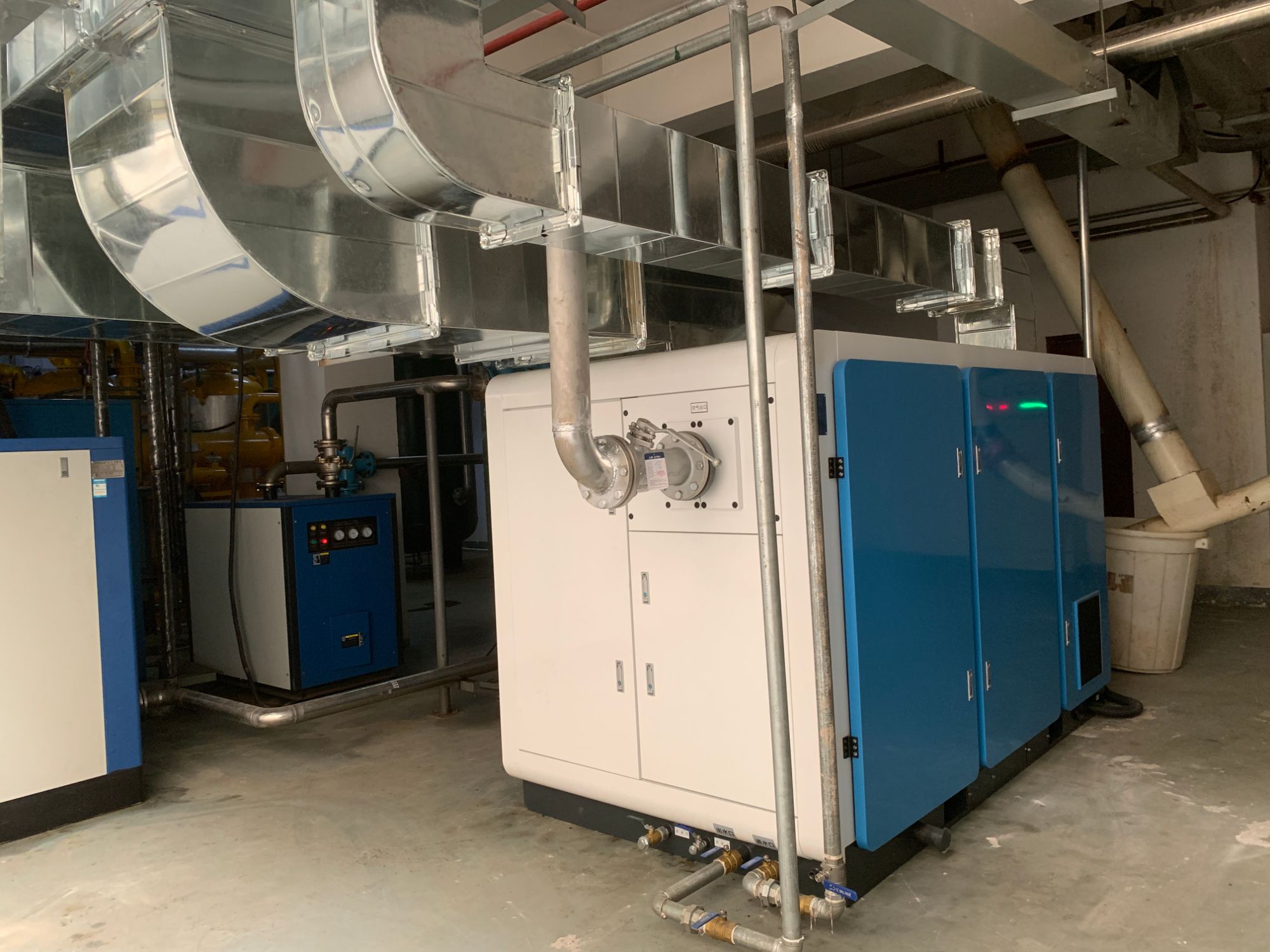
Sterile manufacturing leaves no room for compromise on compressed air quality. A single microscopic oil droplet can shut down a filling line, trigger a batch recall, or compromise a bioreactor culture. Oil-lubricated compressors rely on downstream filters and coalescers to strip out liquid oil, but these cannot fully capture oil vapor or aerosolized hydrocarbons that condense downstream under pressure changes. Over time, oil residue coats piping, valves, and even final product contact surfaces. Oil-free compressors eliminate that contamination vector at the source, which is why they have become the default choice in aseptic processing, lyophilization, and clean utility generation.
Regulatory expectations also push facilities toward oil-free designs. cGMP guidelines and ISO 8573-1 Class 0 air purity specifications demand demonstrable absence of oil, not just low levels. With oil-lubricated systems, every filter housing, drain port, and sampling point becomes a documentation burden during audits. An oil carryover event forces extensive deviation investigations, possible product disposal, and revalidation of the entire air system. Oil-free compressors simplify this verification dramatically because the risk is engineered out rather than managed through filters. The elimination of oily condensate also removes a hazardous waste stream, cutting disposal costs and keeping cleanroom perimeters free from oil-laden aerosols.
Modern oil-free technology has matured well beyond early dry-running designs that suffered from short rotor life and high maintenance. Dry screw, scroll, and centrifugal oil-free compressors now use advanced coatings, tight tolerances, and precision cooling to maintain stable dew points and near-zero oil carryover even under variable load. In applications such as fermentation air sparging, freeze dryer vacuum break, and pneumatic valve actuation inside isolators, the compressed air frequently crosses sterile barriers. Any oil film there can harbor microorganisms or inhibit cell growth, making oil-free air not just a preference but a practical necessity for maintaining sterility assurance and process consistency.
Moisture and Microbial Control in Humid Production Plants
High humidity in production plants does more than simply make the air feel heavy—it creates ideal conditions for mold, yeast, and bacteria to take hold on equipment, walls, and even in the product itself. Condensation on cold pipes, pooled water around floor drains, and damp ceiling tiles often go unnoticed until a contamination event forces a line shutdown. The first step in controlling microbes is therefore controlling moisture at the source: fixing leaks, insulating chilled surfaces, and ensuring that steam and wash-down water are properly vented rather than left to linger.
Mechanical dehumidification is not a set-and-forget fix. Different zones within a plant can have wildly different moisture loads—a cooking area may generate constant steam while a dry packaging room only needs occasional humidity spikes managed. Portable desiccant units, strategically placed exhaust fans, and automated relative humidity sensors that trigger ventilation can keep levels below 60% where it matters most. Regular swabbing of high-risk surfaces, such as conveyor belts and drip pans, confirms that the dryness is actually inhibiting microbial growth rather than just making the air feel comfortable.
Ultimately, moisture and microbial control is a people problem as much as an engineering one. Cleaning crews that leave floors wet after sanitation, or operators who prop open exterior doors for airflow, can undo what a well-designed dehumidification system achieves. Short daily walk-throughs looking for condensation, fogged windows, or musty odors often catch problems before they become costly. Pairing those observations with trend data from humidity loggers gives a complete picture that keeps both moisture and microbes from gaining a foothold.
Pressure Stability for High-Speed Aseptic Filling Lines
On high-speed aseptic filling lines, pressure stability isn't a background parameter; it directly dictates fill dose repeatability and container integrity. A line running at 600+ bottles per minute has almost no tolerance for pressure drift, because the fill valve opens and closes in milliseconds. Even a 0.1 bar oscillation can translate into a measurable weight shift, especially for low-viscosity products or thin-walled PET bottles. The sterile air or nitrogen overlay that maintains positive pressure inside the filling chamber must be controlled within a narrow band, otherwise the barrier can pulse, drawing unfiltered air past seals during negative excursions.
The usual culprit behind instability is not the compressor or blower, but the interaction between demand spikes and line dynamics. When multiple filling heads actuate simultaneously, instantaneous flow demand can exceed supply, causing a temporary pressure sag. If the control loop is too slow, the system never settles before the next actuation wave. This is why simple on/off regulation fails on high-speed lines. A more effective approach uses proportional valves with fast-acting transducers and a small buffer tank placed close to the filler, not at the far end of the utility room. That local capacitance absorbs the transient and lets the valve trim pressure without hunting.
Field experience shows that stability is best achieved by separating the sterile barrier pressure from the product tank headspace pressure. Trying to drive both from one source forces compromises. Dedicated regulators for each circuit, even if they share a common receiver, prevent crosstalk. On a 48-head aseptic filler, isolating the barrier air from the product pressurization eliminated a recurring fill weight drift that only appeared above 500 bottles per minute. Routine checks of transducer response time and valve deadband catch degradation before it becomes a rejection spike. No need for complex models; tight instrumentation and a willingness to tune for the worst-case demand cycle deliver the required stability.
Recovering Compressor Heat Without Risking Cleanroom Air
Capturing waste heat from air compressors in a cleanroom facility is not just an energy-saving move; it’s a balancing act between thermal recovery and contamination control. The hot oil or air leaving the compressor can easily exceed 70°C, making it tempting to route that energy into reheat coils or domestic hot water. But any direct exchange with cleanroom air streams introduces a real risk: if a heat exchanger develops a pinhole leak, compressor lubricant, refrigerant, or untreated outside air could migrate into the controlled environment. That’s why most designs avoid air-to-air contact and instead use an intermediate water-glycol loop with double-wall separation.
A safer approach is to put the recovery heat exchanger on the compressor’s cooling circuit before it reaches the dry cooler or cooling tower. This captures heat without ever exposing the cleanroom airstream to compressor fluids. The recovered warm water can then supply preheat for makeup air handlers or feed a separate hydronic reheat system. Monitoring differential pressure across the double-wall exchanger gives early warning of any internal leak before it becomes a contamination event. The glycol loop can also be fitted with an automatic shutoff valve tied to a leak detector, so that even a tiny breach isolates the cleanroom side immediately.
In practice, the most reliable systems treat compressor heat recovery as a closed, indirect utility—similar to how chilled water or plant steam is handled. The cleanroom’s air handling units never see the compressor loop directly; they only receive heat through a secondary circuit that has its own pressure and conductivity sensors. This layered separation not only satisfies contamination concerns but also simplifies validation, since the recovery loop operates outside the classified envelope. With proper commissioning and routine integrity tests, facilities can reclaim a significant portion of compressor input energy without compromising the air cleanliness that the cleanroom exists to protect.
Early Warning Signs Your Maintenance Team Shouldn't Ignore
A subtle vibration in a motor that wasn't there last week, a faint hiss near a valve that only happens during the night shift, or a slight temperature rise on a bearing housing—these aren't just quirks. They're your equipment trying to tell you something, and ignoring them often means choosing a costly breakdown over a planned repair. The trouble is, many teams are so busy clearing the daily work order backlog that they stop listening for these whispers until they become screams.
One of the clearest signs that trouble is brewing is a shift in baseline data. When the same pump suddenly draws 8% more current to move the same volume, or a conveyor's vibration spectrum shows a new peak at a specific frequency, that's not random variation. It's a pattern. Skilled technicians learn to treat those small deviations as early conversations with the asset—long before a red light appears on the HMI. If your team only reacts to alarms, you've already missed weeks of valuable diagnostic time.
Another warning that often gets dismissed is repeated short stoppages or micro-jams. A line that trips twice a shift for ten seconds each time rarely makes it into the official downtime report, but those interruptions add up. More importantly, each trip is a symptom of an underlying condition—maybe a misaligned sensor, a worn guide rail, or hydraulic pressure creeping past a seal. When operators get used to hitting reset and moving on, that's a cultural red flag as dangerous as the mechanical one.
FAQ
Compressed air can carry moisture, oil aerosols, and viable particles into clean environments. Chinese systems typically pair dry-running or water-lubricated compression stages with multi-stage filtration, desiccant drying, and point-of-use sterile filters, so the air that contacts product or primary packaging meets ISO 8573-1 Class 0 or Class 1 oil limits and appropriate particle and viable counts.
Oil-free screw designs eliminate the risk of oil carryover at the source rather than relying solely on downstream coalescing filters. This reduces validation burden, lowers long-term filter replacement costs, and makes cleanroom documentation simpler, especially for facilities exporting to markets with strict GMP inspections.
They often install heatless or heated desiccant dryers with dew point monitoring tied to the building management system. A pressure dew point of -40°C or lower is common, preventing condensation inside distribution piping that could promote microbial growth or cause powder clumping.
Maintenance is usually interval-based and condition-monitored. Quarterly checks cover intake filters, drain traps, and dew point sensors; semi-annual tasks include oil analysis for gearboxes in oil-free machines and calibration of pressure and temperature transmitters; annual validation may include particle and microbial testing at critical use points, with records kept for audit trails.
Yes, but segregation is normally achieved through point-of-use filtration and pressure reduction rather than separate compressors. Instrument air may be filtered to a lower specification, while product-contact air passes through 0.2 micron sterile-grade filters at the machine. The key is designing the distribution loop to avoid dead-legs and allow sanitization.
Variable-speed operation matches output to demand, reducing pressure fluctuations and frequent start-stops that can draw in contaminants through intake or condensate traps. Stable pressure also keeps terminal filters in a steady airflow regime, preventing particle shedding and extending filter life.
Suppliers provide documented validation support, including clean air test reports, material certificates for wetted parts, and guidance on sampling points. Some offer remote monitoring with audit-ready data logs showing dew point, pressure, and filter differential pressure trends, which helps demonstrate continuous compliance rather than relying on periodic spot checks.
Heat recovery systems capture compression heat for feedwater preheating or HVAC reheat, while high-efficiency motors and dual-stage compression lower specific power. Some plants use centralized controllers to sequence multiple compressors, avoiding part-load inefficiency. These measures cut energy use while maintaining stable dew point and pressure, which indirectly supports sterility by minimizing system upsets.
Conclusion
In Chinese pharmaceutical plants, compressed air is not a utility you can take for granted. Batch safety hangs on the difference between 99.9% and 99.999% sterility, so the air purity level has to match the cleanroom classification, not just the equipment spec. Oil-free compressors have become the default in sterile manufacturing because even trace oil aerosol can ruin a lyophilizer cycle or block a sterilizing filter. But going oil-free solves only one piece: in humid provinces like Guangdong or Jiangsu, moisture carryover turns compressed air lines into microbial incubators unless the dryer and point-of-use filtration are sized for worst-case dew point. On high-speed aseptic filling lines, pressure stability matters more than raw flow; a pressure dip of 0.2 bar can cause vial stoppering to miss its timing, leading to rejected batches or, worse, non-sterile product leaving the line.
Efficiency also has to work alongside sterility. Modern compressor installations often reclaim compression heat for boiler feedwater or HVAC preheating, but the heat exchanger must be physically isolated so that any leak cannot push contaminated air back into the cleanroom air supply. Maintenance teams should watch for early signs that reliability is degrading: rising pressure dew point after filter changes, unexpected oil carryover alarms even on oil-free units, higher purge-air consumption from desiccant dryers, or a slow upward drift in particle counts at the point of use. Catching these signals before they become deviations is what separates a compliant plant from one that only discovers contamination during an audit.
Contact Us
Contact Person: Mia
Email: [email protected]
Tel/WhatsApp: +86 19821985894
Website: https://www.seize-air.com