
OEM Tubular Steel Poles Company Selection Criteria for Long-Term Reliability
2026-09-24
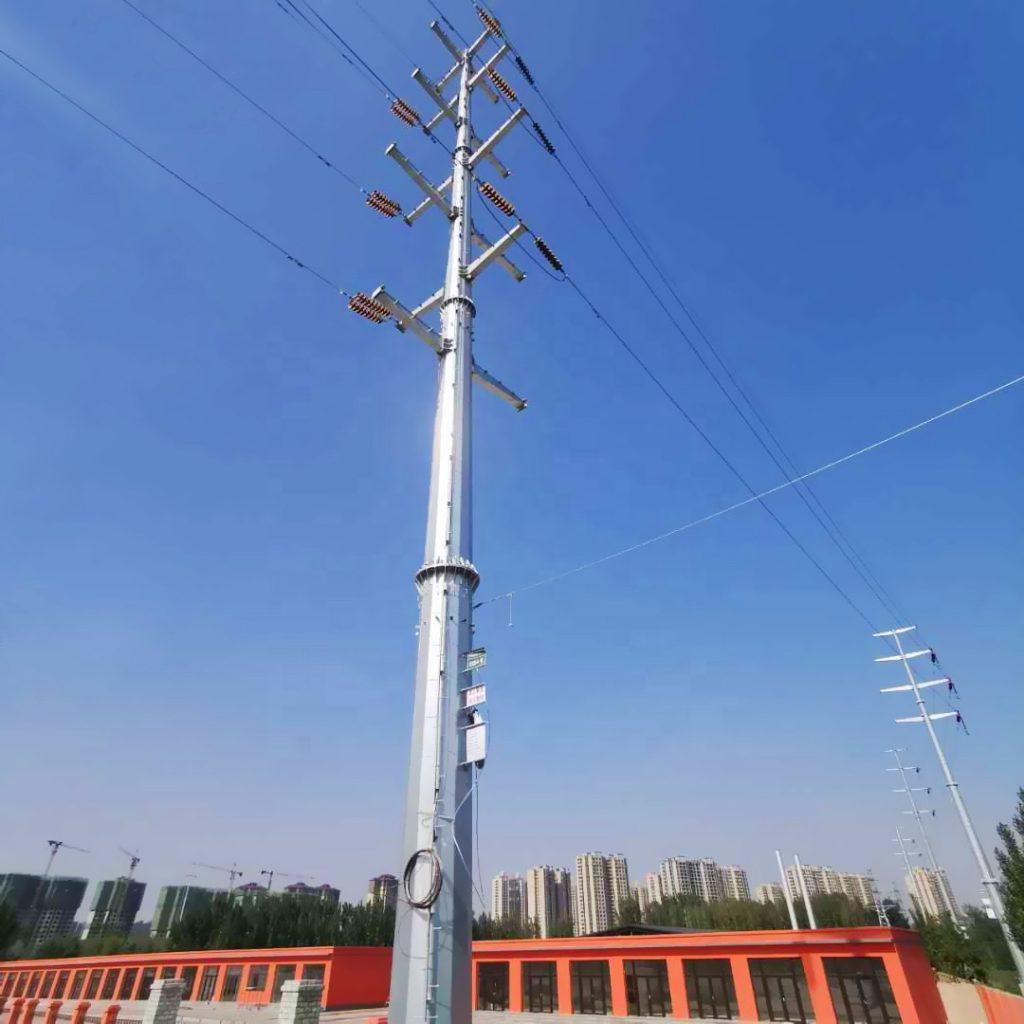
Sourcing OEM tubular steel poles often feels like a gamble—many suppliers promise durability, but few withstand the test of time. The real question isn't just about initial cost or lead time; it's about whether the poles will stand firm through decades of wind, corrosion, and structural stress. That's where selection criteria for long-term reliability become non-negotiable. From material traceability to precision welding and anti-corrosion treatments, every detail matters. Working with a manufacturer like Anbang means looking beyond surface-level specs to evaluate proven field performance, engineering support, and a track record of zero catastrophic failures. In this guide, we'll break down the often-missed factors that separate a short-term bargain from a partner you can trust for the next 20 years.
Mill Test Reports: What the Numbers Actually Reveal
Most people glance at an MTR and look for a pass or fail stamp, but the real story lives in the gaps between the numbers. A carbon reading at the upper end of the permitted range alongside a manganese value sitting near the minimum might each clear the spec, yet together they point to a heat with poor weldability or a fast quench response. These figures are not isolated checkboxes; they trace the actual behavior of that specific melt and the processing window you will have downstream.
Mechanical properties are usually reported as minimums or maximums, but the ratio between them often matters more than the absolute value. A yield strength and tensile strength sitting unusually close together can signal low strain-hardening capacity, meaning the material may neck or tear without warning during cold forming. Even an elongation figure that clears the requirement by a comfortable margin does not reveal whether the ductility is uniform or heavily dependent on sample orientation and location within the original plate or bar.
Trace elements and the consistency of the heat number across multiple reports often expose more than a single chemistry line ever could. If the same heat shows slightly different residual copper, nickel, or chromium levels on separate documents, that points to inconsistent scrap sourcing or blending at the mill. These subtle shifts may sit well inside the allowed range while still causing uneven hardenability, surface discoloration after plating, or unexpected distortion during heat treatment.
Welds That Outlast the Warranty, Not Just the Inspection
A weld that merely passes a visual check or a single round of testing isn't the goal—it's the bare minimum. The real measure of a quality weld is how it holds up years down the line, long after the warranty paperwork has been filed away and forgotten. That kind of longevity comes from more than just following a procedure; it comes from understanding how heat input, filler selection, and cooling rates interact under real-world service conditions.
Too often, welds are optimized for the inspection table rather than the field. A smooth, uniform bead might look perfect on the surface, but hidden undercut, improper penetration, or residual stress can cut its actual service life short. We focus on the less glamorous side of welding—the thermal cycles, the microstructural changes, the slow accumulation of fatigue—so the joint doesn't just pass today's test, but keeps holding when vibration, temperature swings, and load cycles start piling on.
That means choosing filler metals that match the base material's long-term corrosion behavior, not just its tensile strength. It means preheating and interpass temperature control that prevent brittle zones from forming. And it means accepting that a slightly less pretty weld with the right mechanical properties can outperform a visually flawless one that's brittle at the root. When the warranty expires, the weld shouldn't.
Galvanizing Consistency: The Silent Factor in Pole Longevity
Even when poles leave the galvanizing line with a bright, shiny finish, the real question is whether that zinc layer is uniformly applied. Small shifts in immersion time, bath temperature, or withdrawal speed can produce zones where the coating is a fraction of the intended thickness. These variations rarely show up to the naked eye, yet they become the exact locations where corrosion will eventually take hold.
The problem with an inconsistent galvanized coating is not just that thin spots exist—it's that they disrupt the protective logic of the entire system. Zinc works by sacrificing itself, but if one area has far less zinc than its surroundings, that area depletes quickly. Once the underlying steel is exposed, a localized galvanic cell forms, and pitting begins. In coastal or industrial settings with higher chlorides or sulfur compounds, this process can shorten a pole's service life by years without any visible warning.
Some manufacturers have started treating coating uniformity as a core quality metric, not an afterthought. Magnetic thickness gauges, strip tests, and adherence checks are done at multiple points along the shaft, not just at the ends. When consistency is verified systematically, poles tend to outlast their nominal design life with less maintenance. It's a quiet kind of reliability—one that doesn't make noise, but shows up decades later in a still-sound structure.
Load Testing Beyond the Brochure's Favourite Test
Most load testing tools ship with a demo script that hammers a static URL until the server cries. That's fine for a first smoke run, but it tells you almost nothing about how your application will behave when real people log in, fill carts, upload receipts, or leave browser tabs open for forty minutes. The brochure's favourite test often ignores session data, skips third-party API latency, and assumes every request hits the same cache state. It measures the performance of a fictional system, not the one you're shipping.
A more useful approach starts with traffic patterns captured from production or analytics: peak logins at 9am, bursts of file exports before month-end, long-polling chat connections sprinkled throughout the day. Design your test to include think time, unique payloads, and realistic error paths like expired tokens or slow database queries. Then watch the parts that the brochure demos never show — queue depths, connection pool exhaustion, garbage collection pauses, and the one endpoint that only fails when 300 people request the same report at once. If your load test passes without surfacing at least one uncomfortable bottleneck, you probably tested the demo, not the application.
The Supplier's Inventory Buffer and Raw Material Reality
Many suppliers hold a buffer of finished components, but that stock often masks thinner coverage on raw materials. A warehouse shelf might show six weeks of a machined part, while the specialty alloy behind it sits at nine days and the next mill run is already allocated elsewhere. That gap becomes the real constraint when demand shifts or a shipment misses.
Buyers who only ask about finished goods availability miss the upstream problem. One delayed coil of cold-rolled steel can idle a stamping line even when boxes of finished brackets look plentiful. Smart planning teams track buffer not as one number but as a chain: raw stock, work-in-process, and finished units each have their own rhythm and failure points.
Realistic conversations with suppliers begin with raw material lead times, not promised output. A buffer is only as useful as its weakest input. If the supplier cannot confirm an uncommitted alloy heat or resin lot, the downstream inventory is just a temporary illusion.
Field Performance Histories Over Polished Project Lists
Polished project lists often read like resumes: clean, selective, and flattering. Field performance histories, by contrast, accumulate the unedited details—downtime events, repair cycles, output under adverse conditions, and the small improvisations that never make it into a brochure. When you place these two side by side, the gap is rarely about capability and almost always about honesty. A machine that ran for eleven months without a major failure tells you more than a list of ten installations.
The pattern repeats across sectors, from pumping stations to conveyor systems. Teams that log every deviation tend to produce histories that look messy but prove invaluable during procurement. The polished list can win a first meeting, but the field history decides the second contract.
FAQ
Focus on yield strength and weldability. Common choices include ASTM A572 Grade 50 or equivalent, which offers a good balance of load capacity and ductility. Ask for mill certificates for every batch rather than accepting a blanket material statement.
It's one of the strongest predictors of corrosion resistance. Look for hot-dip galvanizing to ASTM A123 or ISO 1461, with a minimum average coating thickness of 85 microns on steel thicker than 6 mm. Thicker coatings matter more in coastal or industrial environments.
The company should have certified welders to AWS D1.1 or equivalent, with documented procedure qualification records. Request sample weld radiographs or ultrasonic test reports from past production runs, not just a certificate on the wall.
In-house galvanizing gives tighter control over turnaround time and surface preparation, but outsourcing can be acceptable if the third-party plant is audited regularly. Ask for the specific galvanizing facility's certifications and recent inspection records either way.
Look for repetitive work with utility or telecom operators rather than one-off commercial jobs. Poles that have survived multiple storm seasons or corrosive coastlines for 10+ years without coating failure are a stronger signal than brochure claims.
Request a sample design calculation package for a similar pole height and loading condition. The calculations should show wind, ice, and galloping loads per ASCE 7 or the local code, with clear assumptions and a safety margin that matches the client's reliability target.
Look for warranties that cover structural integrity and coating adhesion for at least 10 years, but pay more attention to the claims process. A supplier that offers a straightforward inspection and replacement procedure is more credible than one hiding behind fine print.
Yes, especially for large orders. Specify a hold point for incoming steel verification, post-weld dimensional checks, and final coating thickness measurement. A reputable manufacturer will welcome third-party inspectors rather than treating them as a nuisance.
Conclusion
Choosing a tubular steel pole supplier for the long haul means looking past glossy datasheets and into the records that show how the metal actually behaves. A mill test report is only useful if you trace the numbers to the specific heat and compare yield and elongation against what your project demands—not simply that a certificate exists. Weld quality follows the same logic: ask for procedure qualification records and evidence of consistent operator training, not just a clean visual after fabrication. A weld that holds through years of cyclic wind load has properly controlled heat input and full penetration, not merely a smooth cap. Galvanizing gets overlooked because it happens last and looks uniform, but coating thickness measured at multiple points, surface preparation before dipping, and the bath chemistry behind it will decide whether the pole rusts at the base in year seven or still looks dull silver in year twenty.
Equally revealing is what a supplier keeps in reserve. A real OEM carries enough raw steel tube inventory to absorb a design change or a delayed permit without substituting a different grade or rushing a batch through heat treatment. Load testing should go beyond the single static pull shown in every brochure: request results from full-scale cantilever tests, repeated fatigue cycles, and torsion where the pole's actual connection details are included. Finally, ask less about the polished project list and more about field behavior. A supplier with ten years of poles standing in coastal salt spray or high-cyclone zones, and who can share maintenance history or failure rates, tells you far more about long-term reliability than a portfolio of photogenic installations.
Contact Us
Contact Person: antor khan
Email: [email protected]
Tel/WhatsApp: 8613863903569
Website: https://www.qdabtower.com/