
OEM Tubular Steel Poles Dealers You Can Trust for Quality Fabrication
2026-10-04
Finding a fabricator that actually understands your specs for OEM tubular steel poles is harder than it sounds. Most dealers promise precision, but then you’re stuck reworking welds or chasing tolerances. That’s where Anbang changes the conversation. Instead of treating your order as another batch, we build each pole around your exact load, finish, and fitment requirements — so quality isn’t a hope, it’s the baseline.
What Actually Separates a Reliable OEM Tubular Steel Pole Fabricator from the Rest?
A dependable OEM tubular steel pole fabricator rarely wins on price alone. You see it in the shop floor records—mill certifications tied to each heat number, weld maps that match every longitudinal seam to a qualified procedure, and incoming steel inspected for laminations before it ever touches a brake press. The ones worth keeping don’t hand you a generic datasheet; they can walk a third-party inspector through the exact galvanizing bath chemistry and passivation process used on your last batch.
What tends to get overlooked is how they handle the awkward details. Ask how they control runout on a 14-meter pole with a slip joint, or whether they’ve ever sectioned a finished pole to verify penetration at the root of a full-length weld. If the answer drifts into “we follow standard industry practice,” that’s your cue to keep looking. Reliable fabricators keep cut samples, deflection test reports, and fit-up jigs on hand—not because a contract demands it, but because they expect you to ask.
Finally, the difference shows up in communication before and after delivery. A solid OEM partner will flag a tolerance conflict in your drawing before cutting steel, suggest a stiffer base plate profile if your soil data implies fatigue concerns, and still answer the phone six months after the poles are installed. That kind of accountability is harder to fake than a slick brochure.
Reading Past the Spec Sheet: The Fabrication Details That Matter Most
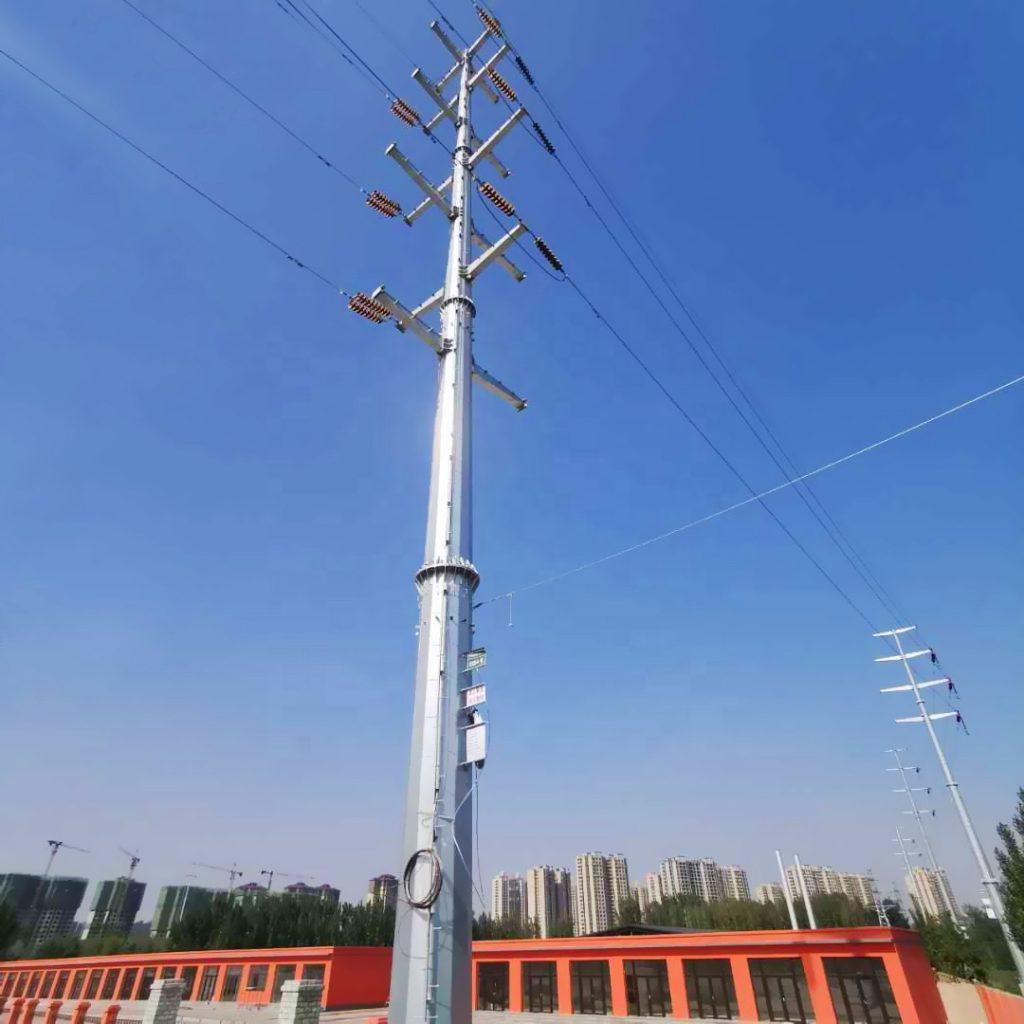
A spec sheet tells you the thickness of the steel, but it won't show how the edges were deburred after laser cutting. Run a finger along a poorly finished bracket and you'll feel the difference immediately—microscopic burrs that snag, corrode early, or chew through wiring. In fabrication, the hours spent on a clean chamfer or a consistent radius often separate equipment that lasts a decade from gear that starts degrading in year two.
Weld appearance gets glanced at, but the real story is penetration and heat control. A beautiful stack of dimes can hide lack of fusion if the welder rushed the root pass. Watch for telltale undercut along the toe, discoloration that suggests too much heat, or inconsistent bead width that points to shaky travel speed. Those details determine whether a joint flexes under load or cracks after repeated vibration.
Surface prep before powder coat or paint is another invisible line item. Without proper phosphate treatment or media blasting, even a premium coating lifts and peels within months. Ask about pretreatment stages, not just the final color. The best shops can describe their wash chemistry and blast profile with the same confidence as their tensile strength numbers.
Where Skilled Welding and Tight Tolerances Really Come Into Play
The difference between an acceptable weld and a scrap part often shows up long before final inspection. When a manifold for semiconductor processing equipment has six ports that must align within 0.05 mm after welding, every bead placement and every pause in heat input matters. A welder who understands how stainless steel pulls and twists as it cools can sequence the joints to cancel out distortion, using minimal filler and backing gas to keep the inside clean. Tight tolerances here are not a drawing-room abstraction; they are the line between a sealed gas line and a slow leak that contaminates a wafer batch.
In sanitary tube systems for pharmaceutical or food production, the tolerance stack is invisible until the pipe hangers no longer line up. A skilled TIG welder controls penetration so precisely that the root bead stays flush on the inside, leaving no crevice for bacteria to hide. If the weld shrinks the tube by even half a millimeter over a long run, the final spool piece will not bolt to the pump flange without forcing it, and forcing it creates stress that invites cracks later. This is where experienced hands replace guesswork: they know how much to pre-set a gap, when to back-step, and how to read the puddle to hold roundness.
Thin-wall aerospace assemblies push the same discipline further. A titanium exhaust duct with a wall thickness of 0.6 mm and a profile tolerance of ±0.1 mm will not forgive a heavy hand. One extra second of arc time can sink a side wall, and grinding it back only thins the material below the minimum. Skilled welders working to tight tolerances often build their own heat sinks and purge dams, adjust travel speed mid-seam, and compensate for fit-up gaps measured with feeler gauges. The result is not just a welded part, but a stable shape that fits its mating hardware without rework, time after time.
The Real Cost of Cheap Tubular Steel Poles (And How to Avoid It)
Cheap tubular steel poles look like a bargain on the invoice, but the hidden expenses start piling up almost immediately. You might save a few dollars per unit upfront, only to watch those savings evaporate in rust repairs, premature replacements, and even safety incidents. The thin galvanizing wears off in months, the welds crack under normal wind loads, and suddenly you're back on the phone ordering replacements while your original budget lies in tatters.
The real cost shows up in places most buyers never think to check. Shipping damage from flimsy packaging means higher rejection rates at the dock. Installation crews burn extra hours fighting poles that arrived bent or out of round. Then there's the long-term liability: a cheap pole that fails in a storm can take down power lines, damage property, or worse. Once you factor in downtime, labor, and potential legal exposure, that "budget" pole often ends up costing three to five times more than a properly engineered alternative.
Avoiding this trap isn't about spending the most money, but about asking the right questions before you buy. Demand actual coating thickness measurements, not just a promise of "galvanized." Ask for batch test reports on weld strength. Look for suppliers who back their poles with a real warranty and a track record in your specific environment. A pole that survives ten years without intervention is always cheaper than one you have to replace twice in the same period.
How Top Dealers Handle Galvanizing and Coating Without Cutting Corners
The best dealers never treat galvanizing as an afterthought. They inspect the raw steel before it enters the bath, checking for surface defects that could compromise the zinc bond. Thickness readings are taken on-site, not just promised from a data sheet. If the zinc layer falls short on an edge or weld, the entire batch gets pulled and re-dipped. That kind of refusal to ship borderline work is what separates a supplier who values their reputation from one who just moves inventory.
Coating lines demand the same unromantic attention. Top dealers monitor oven temperatures and line speeds shift by shift, not once a month. They pull random samples from the middle of a run, not the conveniently perfect ends. When a customer specifies a dry film thickness, the dealer verifies it with multiple gauge points across each part — and they keep those records for years. If a corner is too thin, they touch it up properly rather than hiding it under a fresh coat and hoping nobody notices.
Cutting corners usually shows up slowly: rust blooming at a punched hole, a scratch that grows into a stain, a coating that peels after one winter. Dealers who handle galvanizing and coating honestly understand that their name rides on every beam and bracket. They would rather lose a few dollars on a re-run than lose a customer's trust over a shortcut. That mindset — boring, disciplined, and unglamorous — is exactly what keeps their material standing long after the cheaper options have failed.
Consistency Across Large Orders: What Trusted OEM Partners Do Differently
When a brand places a 50,000-unit order, the real test isn't the first hundred pieces—it's the last hundred. Most factories can produce a flawless sample run. The difference with a trusted OEM partner is that they treat variance as a design problem, not an inspection problem. They start by locking down raw material sources and batch testing protocols before production begins, because they know that a supplier switch mid-run is where consistency quietly dies.
That discipline shows up in how they handle the production floor. Instead of relying on a final QC gate to catch drift, they monitor critical dimensions at fixed intervals and adjust tooling on the spot. Their engineers keep a live record of process capability, and if a parameter starts trending toward the edge of tolerance, they stop and correct it—even when every part still passes. That's not overkill; it's what prevents the slow slide from unit one to unit ten thousand.
They also make consistency something you can verify without standing in their factory. A reliable OEM will document batch numbers, machine settings, and inspection data in a format your team can audit. More importantly, they'll ask about your end-use conditions up front—temperature, handling, stress points—and bake those into the production spec. That level of foresight is why their large orders arrive looking less like a collection of individual parts and more like one continuous run.
FAQ
Focus on their fabrication capabilities, material traceability, welding certifications, and whether they can handle custom diameters and wall thicknesses. A good dealer will also walk you through lead times and finishing options like hot-dip galvanizing or powder coating.
Ask for mill test reports, sample sections, and details on weld testing. Reputable dealers will share documentation on dimensional tolerances, straightness, and coating thickness. Visiting the facility or requesting a video tour can also reveal how organized their production line is.
Yes, most trustworthy OEM dealers work directly from your drawings and can adjust base plates, arm mounts, handholes, and slip joints. They should confirm the exact steel grade and loading requirements before production begins.
Common finishes include hot-dip galvanizing, powder coating, primer plus polyurethane topcoat, and weathering steel. The right finish depends on the installation environment, so a knowledgeable dealer will recommend one based on humidity, coastal exposure, or industrial pollutants.
Lead times depend on order size, current production queue, and finishing steps. You can generally expect four to ten weeks for standard custom poles, but it's wise to confirm a locked-in schedule and penalty clauses for late delivery before signing.
An OEM gives you direct control over material selection, welding procedures, and quality checks. You're not paying an extra markup for a middleman, and if design changes are needed, communication is faster and more accurate.
Common choices include ASTM A36, A572 Grade 50, and A871 for weathering steel. For high-strength or lightweight designs, some dealers offer HSLA grades. Your choice should match the structural loads, deflection limits, and corrosion environment.
Request close-up photos of previous projects, especially weld seams and base plate alignment. Ask about their tolerance limits for straightness and ovality. A reliable dealer will also provide references from past buyers in similar industries.
Conclusion
Trusting an OEM tubular steel pole dealer goes beyond flashy certifications. Genuine fabricators distinguish themselves through an almost obsessive attention to details that spec sheets rarely capture: how weld seams are cleaned, how fixtures hold poles during assembly, and how they control heat distortion. Skilled welders who understand metallurgy deliver tight tolerances that directly affect field assembly and structural longevity. Cheap poles often hide flaws—thin galvanizing layers, inconsistent wall thickness, or rushed welds—that surface only after installation, leading to costly replacements or failures. A dealer worth partnering with will openly discuss these fabrication realities and show you exactly how their process mitigates them.
Galvanizing and coating are where many suppliers cut corners, but trusted OEM partners treat these steps as non-negotiable. They maintain strict pre-treatment routines, monitor zinc bath chemistry, and often add duplex coatings for harsh environments. Consistency across large orders is another hallmark: they use documented procedures, jigs, and real-time inspection so that pole number 500 matches pole number one. When you find a dealer who speaks plainly about tolerances, weld quality, and coating adhesion—and who has the shop floor discipline to prove it with full traceability—you've found a partner who won't let your project down.
Contact Us
Contact Person: antor khan
Email: [email protected]
Tel/WhatsApp: 8613863903569
Website: https://www.qdabtower.com/