
Top High Voltage Steel Pipe Tower Company Delivering Engineered Transmission Solutions
2026-07-30
When it comes to high voltage transmission, the backbone of any reliable power grid is the steel pipe tower—and engineering excellence makes all the difference. Anbang has quietly built a reputation for delivering precisely that, combining decades of expertise with innovative design to tackle the toughest terrain challenges. In this post, we’re peeling back the layers on how a top-tier tower manufacturer turns complex specifications into towering realities that power cities and industries across the globe. Whether you’re an engineer scoping your next project or simply curious about the skeletal giants lining the horizon, there’s more here than meets the eye.
High-Voltage Performance: Steel Pipe Towers Built to Last
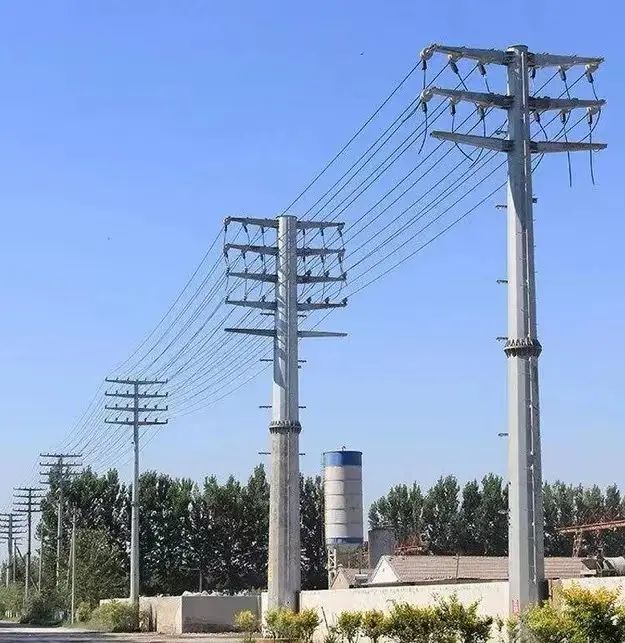
Steel pipe towers form the backbone of modern high-voltage transmission, engineered to handle extreme electrical and mechanical stresses over decades of uninterrupted service. The tubular design naturally reduces wind resistance and eliminates the sharp edges found in lattice towers, minimizing corona discharge and energy loss at high voltages. This shape also presents a smaller visual footprint while maintaining the structural integrity needed to support heavy conductor loads across challenging terrains. From mountainous corridors to hurricane-prone coastal regions, these towers stand firm against nature’s worst, thanks to precisely calculated geometries and high-strength steel alloys that resist fatigue cracking.
Longevity begins at the steel mill, where carefully controlled chemical compositions and advanced rolling techniques produce plates and coils specifically optimized for transmission structures. Hot-dip galvanizing remains the primary defense against corrosion, but in aggressive environments, duplex coating systems combining zinc-rich primers with epoxy and polyurethane topcoats extend service life beyond 70 years. Some utilities now specify weathering steel for remote locations, allowing a stable patina to form that seals the surface without additional coating. Inside the poles, automated welding and post-weld heat treatment preserve the microstructure of the heat-affected zone, preventing brittle fractures that could arise from welding stresses. Each tower section undergoes rigorous ultrasonic and X-ray inspections before leaving the factory, ensuring invisible flaws never reach the field.
In the field, construction crews appreciate the rapid assembly made possible by slip-fit or flange-bolted connections, which reduce helicopter or crane time in difficult access areas. These joints are designed not just for quick fit-up but for reliable electrical continuity across the entire structure, often supplemented by copper grounding tapes that shunt lightning currents safely into the earth. While the tower itself is passive, its reliability directly impacts the grid’s resilience: a properly manufactured and maintained steel pipe tower routinely surpasses its 50-year design life with minimal intervention, quietly carrying power to millions. From rigorous prototype testing under simulated hurricane winds and ice loads to the last bolt torqued on site, every step in the process reflects a commitment to performance that never compromises on safety or durability.
Custom-Engineered Solutions for Complex Transmission Projects
Every transmission project carries its own fingerprint of challenges—unusual load patterns, harsh environments, or space constraints that off-the-shelf components simply can’t address. Our approach starts with a deep dive into the operational realities, mapping torque spikes, misalignment tolerances, and service life expectations before a single drawing takes shape. This upfront engineering intimacy means the final solution isn’t just adapted, but purpose-built from the ground up, often blending proprietary material treatments and unconventional geometries that never appear in standard catalogs.
Where standard powertrains hit their limits, custom gearing and coupling designs redefine what’s possible. We’ve engineered hollow-shaft configurations with integrated thermal barriers for steel mill rollers, helical bevel sets that pack twice the torque density into subsea tractor drives, and backlash-eliminating mechanisms for precision radar pedestals facing gale-force gusts. Each prototype undergoes accelerated lifecycle testing that mimics real-world abuse—right down to deliberate overload cycles and contaminated lubrication scenarios—ensuring the final hardware survives conditions that send generic parts to the scrap bin.
The result isn’t just a component drop-in. Clients receive fully documented assemblies with installation jigs, condition-monitoring integration points, and field-service kits designed for their crew’s skill level. This end-to-end ownership of the solution chain slashes commissioning time on site and eliminates the finger-pointing that often plagues multi-vendor drivetrain projects. From arctic mining conveyors to vacuum-chamber robotics, the measure of success is a transmission that operates invisibly, letting operators focus on their core task instead of nursing temperamental machinery.
Precision Fabrication: Where Quality Meets Structural Integrity
Precision fabrication isn’t just about hitting tight tolerances—it’s a discipline where metallurgy, tooling dynamics, and process control converge to uphold structural integrity. Every cut, weld, or forming operation introduces stresses that can either reinforce or weaken a component. Skilled fabricators read grain flow, thermal history, and residual stress patterns as clearly as blueprints, tailoring each step to the material’s inherent character. This attention to material behavior transforms raw stock into reliable frameworks, ensuring that the final assembly performs under load without compromise.
The true measure of quality emerges when these parts enter demanding environments—whether inside a jet engine or a seismic-resistant building joint. In such settings, a microscopic inconsistency can cascade into failure. That’s why precision fabrication goes beyond dimensional checks; it integrates non-destructive testing right into the build sequence. Ultrasonic scans, dye penetrant inspections, and real-time thermal monitoring all serve to verify that internal integrity matches the external finish. By binding flawless execution with rigorous verification, the craft delivers structures that aren’t just built to spec, but built to last.
Innovative Tower Design Redefining Power Delivery
Traditional power delivery infrastructure often relies on bulky, inefficient towers that dominate landscapes and constrain urban planning. A new wave of tower design is challenging these conventions, merging aesthetics with advanced engineering. By integrating conductive materials directly into structural elements, these towers eliminate the need for separate, unsightly cable systems. The result is a sleek, almost sculptural form that blends into surroundings while handling high-capacity transmission. This shift not only improves visual integration but also reduces material waste and maintenance demands, setting a fresh benchmark for how energy networks can coexist with communities.
Beyond appearance, the internal geometry of these towers has been re-engineered to boost performance. Optimized cross-sections and adaptive load-bearing frameworks allow for greater resilience against extreme weather, from high winds to ice accumulation. Modular components make assembly faster and repairs less disruptive, keeping downtime to a minimum. Embedded sensors provide real-time data on structural health and electrical flow, enabling proactive adjustments that prevent outages. This smart, self-monitoring approach turns passive steel skeletons into active participants in grid stability, ensuring consistent power supply even as demand patterns shift unpredictably.
Perhaps the most transformative aspect is how these designs unlock new possibilities for energy distribution. Lower-profile towers with reduced electromagnetic interference can be placed in dense urban zones, shortening the distance between generation and consumption. This opens the door for localized microgrids and easier integration of renewable sources, cutting transmission losses and bolstering energy security. Rather than being a bottleneck, the tower becomes an enabler of decentralized, resilient power networks. In rethinking something as fundamental as the tower itself, the industry is not just improving a component—it’s reshaping the entire logic of how electricity reaches people and places.
End-to-End Project Support for Seamless Delivery
When you take on a new initiative, the last thing you want is to juggle multiple vendors or lose momentum halfway through. Our approach brings everything under one roof—from initial scoping and resource allocation to execution, testing, and final handover. It’s not just about checking boxes; we anticipate roadblocks before they surface, so your timeline stays intact and your team can focus on what they do best, without having to micromanage the details.
What sets this apart is the depth of involvement we bring to each phase. We don’t hand off a plan and then disappear until launch day. Instead, there’s a continuous loop of feedback and adjustment, with dedicated points of contact who understand both the big picture and the nitty-gritty of your industry. This eliminates the usual back-and-forth that drains time and budget, transforming what could be a fragmented process into a fluid, well-choreographed sequence.
Clients often tell us that the real difference shows up in the moments that usually cause panic—last-minute changes, shifting priorities, or unexpected technical snags. Because we’ve built redundancy into the workflow and maintain a buffer for course correction, these hurdles become manageable parts of the journey rather than project killers. The result isn’t just a delivered product; it’s a delivery experience that feels remarkably calm from your end, even when the backend is running at full tilt.
Future-Ready Infrastructure: Sustainable Steel Tower Solutions
In an era where climate resilience and resource efficiency define project success, steel towers are quietly rewriting the rules of infrastructure design. Advanced high-strength alloys and modular fabrication techniques now allow these structures to carry heavier loads with less material, slashing both carbon footprints and construction timelines. From wind turbine hubs to transmission grids, the shift toward fully recyclable steel assemblies is turning static frameworks into adaptive, low-waste systems that evolve alongside community needs.
Beyond material gains, the integration of smart coatings and structural health sensors is eliminating the guesswork from long-term maintenance. Self-healing paints, corrosion-resistant nano-layers, and embedded fiber optics feed real-time data directly to operations teams, flagging micro-fractures or fatigue years before they become hazards. This proactive approach extends service life by decades while cutting routine inspection costs—a quiet revolution in asset management that sidesteps the disposable culture plaguing most built environments.
Perhaps most transformative is the way these towers are redefining locality. Instead of defaulting to centralized manufacturing, steel components are increasingly sourced from regional micro-mills powered by renewable energy, drastically reducing transport emissions. On site, bolt-together joints replace welded connections, enabling disassembly and reuse rather than demolition. The result is a new breed of infrastructure that doesn’t just serve communities temporarily—it becomes a material bank for the next generation of towers, bridges, and energy networks.
FAQ
We combine decades of specialized engineering experience with a vertically integrated manufacturing process. Our team develops innovative designs that handle extreme voltage levels and challenging terrains while using proprietary anti-corrosion treatments that extend tower lifespan beyond industry averages.
Every project goes through rigorous structural analysis using advanced modeling software, followed by full-scale prototype testing in our accredited laboratory. We also maintain strict quality control at each production stage, from raw material inspection to final load testing of completed sections.
We produce a wide range of configurations including suspension towers, tension towers, angle towers, and dead-end structures. These are all designed for voltages from 110 kV up to 765 kV, with special adaptations for river crossings, mountainous regions, and urban corridors where compact footprints are essential.
Rather than offering standard catalog items, we start with your grid requirements and site conditions to create tailored tower systems. This includes foundation design optimization, conductor clamping solutions, and even logistics planning to ensure seamless delivery to remote locations.
Three key differentiators: first, our hot-dip galvanizing process with a minimum coating thickness that exceeds international standards; second, our modular bolted connections that speed up assembly without on-site welding; and third, our integrated lightning protection design methodology that reduces line outages.
Our two plants combined can output over 50,000 metric tons per year, with automated CNC cutting lines and multi-head welding stations allowing us to handle large-volume utility contracts without compromising individual tower quality.
We assign a dedicated project engineer who works directly with your design team from concept to commissioning. This single-point contact ensures that special loads, unusual tower heights, or non-standard fittings are properly integrated into our production workflow without delays.
Beyond fabrication, we provide on-site supervision for tower erection, drone-based post-installation inspection, and a 15-year structural warranty. Our after-sales team also maintains an inventory of critical spare parts to support emergency repairs within 72 hours.
Conclusion
As power grids evolve to meet growing demands, one company stands out by delivering high-voltage steel pipe towers that combine durability with precision engineering. Their towers are built to endure extreme conditions, ensuring reliable performance over decades of service. Every project benefits from custom-engineered solutions that address the unique challenges of complex transmission networks, from mountainous terrain to urban corridors. By integrating advanced fabrication techniques, the company achieves structural integrity without compromise, reinforcing a commitment to quality that resonates in every weld and connection.
Beyond manufacturing, the company redefines power delivery through innovative tower designs that optimize efficiency and reduce environmental impact. Their end-to-end project support—from initial planning to final installation—ensures seamless execution and on-time delivery. Looking ahead, they champion sustainable steel solutions, embracing recycled materials and future-ready infrastructure that aligns with global energy transitions. In a field where reliability is non-negotiable, this company consistently provides the backbone for modern transmission, proving that engineering excellence and environmental stewardship can go hand in hand.
Contact Us
Contact Person: antor khan
Email: [email protected]
Tel/WhatsApp: 8613863903569
Website: https://www.qdabtower.com/